
If you’ve been searching for a working TradingView promo code, you’ve hit the usual problem: plenty of “codes” online, almost none that apply at checkout. That’s because TradingView isn’t a coupon-driven product. There’s no code you just type in for a standing discount. The real savings come from timing and how you enter the platform. Once you accept that, it gets simple. For how TradingView holds up as a screener and against subscription research tools, see those roundups.
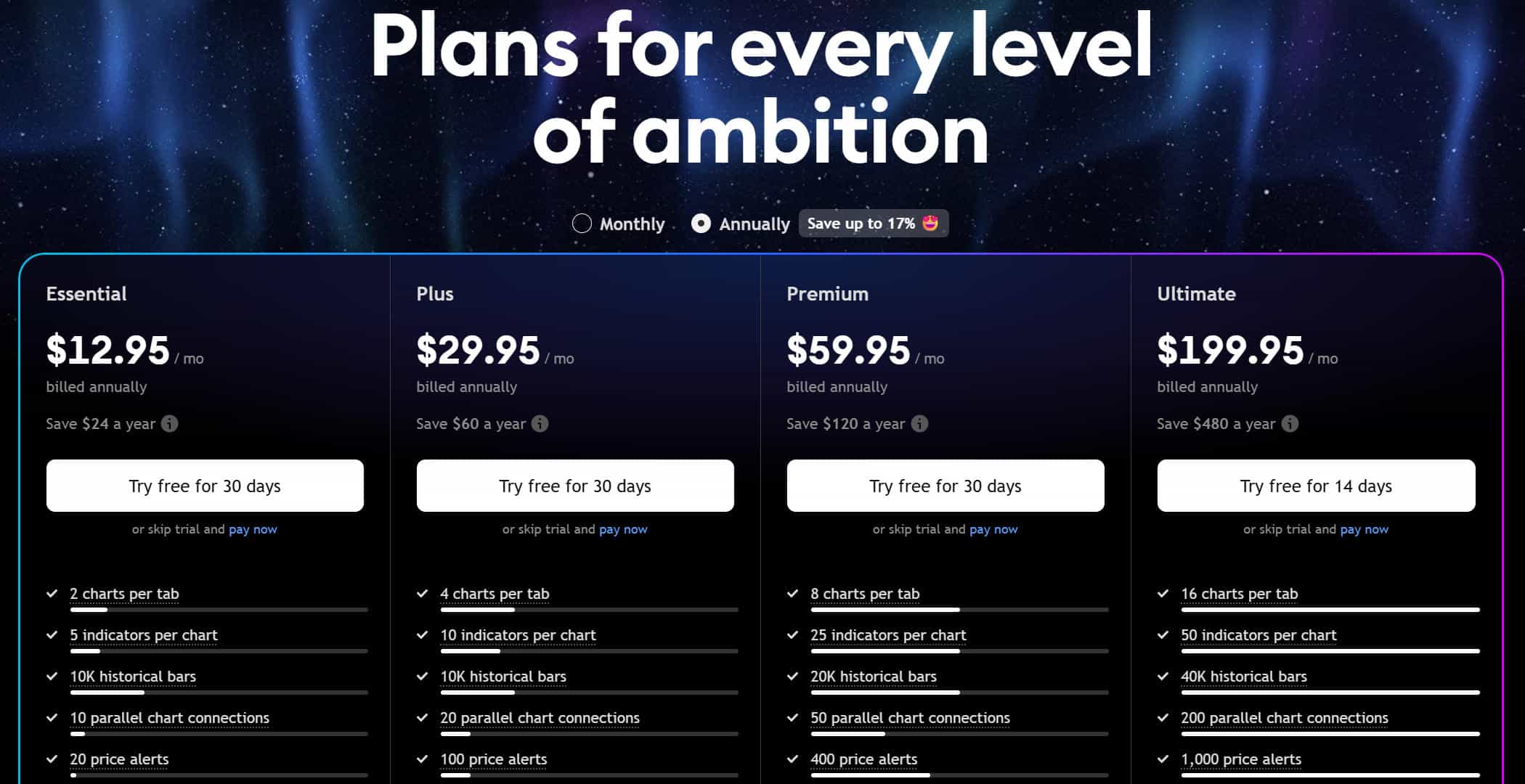
The plans, and what they cost
The free plan is usable to start: real-time data on many symbols, basic charting, a couple of indicators, one alert. You’ll outgrow it once you want more indicators on a chart, multiple layouts, or several alerts running.
| Plan | Roughly (annual billing) | Who it’s for |
|---|---|---|
| Free | $0 | Learning the interface, testing ideas |
| Essential | ~$13–15/mo | 5 indicators per chart, 2 charts, no ads |
| Plus | ~$25–28/mo | 10 indicators, 4 charts, more alerts |
| Premium | ~$50–60/mo | 25 indicators, 8 charts, second-by-second data, priority support |
Where discounts actually come from
Seasonal sales. The biggest cuts land at roughly the same time each year, especially the Black Friday and year-end window, and they can be substantial on a first annual term. If you’re not in a hurry, waiting for one is the single best move.
In-platform offers. If you use the free version regularly, TradingView pushes upgrade offers directly in the app. They’re not called promo codes, but that’s what they are, and heavier chart users see them more often.
Referral and partner links. Some entry points give you account credit or a longer trial rather than an upfront percentage off. This link currently adds a $15 credit toward your first paid plan.
What you won’t find is a permanent 60% or 70% off code that works whenever you want. A meaningful discount almost always means annual billing during a promotion window.
Why most people overpay
Two mistakes. The first is subscribing too early: you try it, like it, upgrade at full price within days, and only later notice the seasonal sale you could have caught. The second is trusting random promo-code sites, where the codes are mostly expired or never worked, which leaves people thinking discounts are rare when they’re just structured differently.
There’s also a 30-day money-back guarantee on paid plans, so if you upgrade and it isn’t for you, you’re not stuck.
Is it worth waiting?
If you already know you’ll use TradingView regularly and a sale is close, wait for it: the difference over a full year is real. If you’re still experimenting, stay on the free plan; there’s no pressure to rush.
The short version
There is no secret code. The people who consistently pay less just pay attention to timing. Don’t rush into a full-price subscription, ignore unverified code lists, and upgrade when a real promotion appears. That alone puts you ahead of most users.
Financial disclaimer: The content on StockVane is for educational and informational purposes only and should not be construed as professional financial advice. Investing carries risk of loss.